
Specifying structural sheet goods should be boring. Tick the right box, nominate the right standard, job done.
But when F17 grade plywood is specified badly, it stops being boring very fast. Costs jump, inspections get tense, and builders start ringing around trying to source something that might not even exist in the form the documents imply.
This is about the real world stuff that goes wrong on Australian sites. Not theory. Not manufacturer brochures. Just the mess that follows vague notes and copied specs.
What is being asked for when someone specifies F17 in the first place?
They are asking for a structural plywood product with a stress grade of F17, suitable for the load case the engineer has designed for. In Australia, that usually means the sheet has to line up with the right Australian Standards, the right bond classification, and the right application.
The problem is the drawings often only say “F17 ply” and leave everything else to chance. Chance does not build houses.
Why does “F17” alone not describe the plywood properly?
Because F17 is only one part of the story. It says nothing on its own about glue bond, durability, face grade, surface treatment, slip resistance, formaldehyde class, or whether the panel is even intended for the environment it is going into.
On Australian projects, F17 grade plywood might be expected to be used for bracing, flooring, formwork, or exterior linings. Those are very different use cases. The spec has to say which one they mean. “
What happens when the sheet thickness is not nominated clearly?
They get substitution chaos. One party assumes 17 mm, another prices 19 mm, and someone else orders 21 mm because that is what their supplier had in stock.
Even if the stress grade stays the same, thickness changes fixings, edge distances, floor levels, stair risers, and deflection outcomes. If F17 grade plywood is called up without a thickness, the project is basically inviting a coordination issue.
How do bad environmental assumptions cause failures later?
They specify an internal-use product for external exposure, or for a wet area, and the panel does what timber does. It moves. It swells. It de-laminates if the bond class is wrong for the moisture cycling.
This is common around coastal NSW and QLD where humidity is brutal, and it also shows up in Melbourne winters when sites are left open longer than planned. F17 grade plywood still needs the right bond and durability match.
Why do builders get stuck trying to source a product that matches the documents?
Because some documentation describes a unicorn. It might combine an F-grade, a decorative face, a special coating, and an uncommon thickness, all in one line.
Suppliers then offer the nearest available product, and suddenly the engineer is being asked to “just accept it”. If F17 grade plywood is genuinely required, sourcing should be checked early, not discovered when frames are already up.
What goes wrong when the standard is not referenced on the drawings?
They lose the shared language that keeps everyone aligned. In Australia, structural plywood generally links back to AS/NZS 2269 (structural plywood) and related framing and bracing requirements, depending on the application.
Without standards being nominated, one subcontractor may assume imported non-structural sheathing is fine. Another may assume formply. Another may assume hoop pine. F17 grade plywood becomes a label people interpret differently.
How do bracing and diaphragm designs get compromised by vague plywood call-ups?
They end up installed with the wrong orientation, wrong nail spacing, wrong edge support, or wrong panel layout. Bracing is not just “some sheets on a wall”. It is a system.
If the spec just says F17 grade plywood but doesn’t define bracing panel type, fixing schedule, jointing, blocking, and tie-down integration, the wall might look right and perform wrong. That gets ugly during certification.
What happens when the face grade and appearance expectations are not stated?
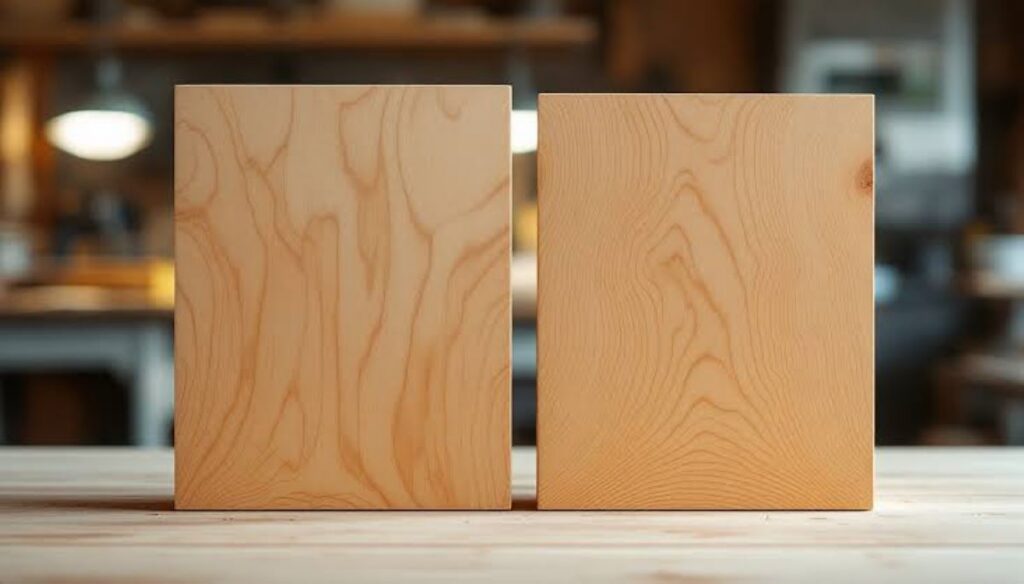
They fight over what “good finish” means. One party expects clean, consistent faces for a visible soffit. Another delivers structural utility faces with knots, patches, and colour variation.
Structural performance might be fine, but the architect, owner, or builder may reject it on looks alone. If F17 grade plywood is intended to be exposed, the face grade must be specified like it matters. Because it does.
Why do slip, coating, and surface requirements matter on floors and platforms?
Because “plywood floor” can mean different things. Some projects need a sanded surface for vinyl prep. Others need a textured, slip resistant coating for temporary access. Others need an overlay suited to wet trades.
If F17 grade plywood is used for flooring and the surface is wrong, it can create safety risks, failed finishes, or extra sanding and levelling that no one budgeted for.
How do fixings and detailing errors show up when the spec is incomplete?
They get edge splitting, blow-outs, squeaks, or fastener pull-through. Plywood is sensitive to edge distances, pre-drilling in some cases, and moisture content at install.
Bad specs also miss basics like sealing cut edges in exposed locations, spacing sheets for expansion, and aligning joints over supports. Even with F17 grade plywood, poor detailing can make the installation look and behave like cheap packing material.
See Also : A Plain Guide to Plywood Formwork
What is the commercial damage when F17 is specified badly?
They pay for it twice. First in over-ordering or wrong ordering, then again in delays, rework, or redesign. On Australian residential builds, that can mean lost weeks waiting for supply, especially if a particular species or panel type is scarce.
It also drives dispute risk. If the contract says F17 grade plywood and the builder supplies “equivalent”, someone has to decide what equivalent means. That decision is rarely calm.
How should a better plywood specification be written to avoid all of this?
They should specify it like a complete product, not a nickname. The call-up needs, at minimum, stress grade, thickness, bond class, standard reference, application, and any finish requirements.
A clearer approach is to state the structural requirement and then lock down what the panel must be suitable for. If F17 grade plywood is essential, the documents should also allow for verified alternatives with equal or better performance, assessed before ordering.
Where do these mistakes usually start, and how can teams catch them earlier?
They start with copied notes. An old detail from a Brisbane job ends up on a Perth set, even though exposure, availability, and construction method are different. Or a generic spec clause is dropped into a high-end architectural build without the appearance parts.
Catching it early is boring work. Review the plywood call-outs during design coordination, then confirm availability with Australian suppliers. If the job truly needs F17 grade plywood, treat it like a long-lead item, not a footnote.
What is the simplest takeaway for Australian projects?
They should stop treating “F17” as a complete instruction. It is not. It is one property in a chain of properties that determine whether the sheet is right for the build.
When F17 grade plywood is specified badly, the site pays the price. When it is specified properly, no one talks about it, which is exactly how it should be.
FAQs (Frequently Asked Questions)
What does specifying F17 grade plywood actually mean in construction?
Specifying F17 grade plywood means requesting a structural plywood product with a stress grade of F17 that meets the engineer’s load requirements. In Australia, this involves aligning with the correct Australian Standards, bond classification, and application suitability to ensure the panel performs as intended on site.
Why is stating just ‘F17’ not enough when specifying plywood?
Because ‘F17’ only indicates the stress grade and doesn’t cover crucial factors like glue bond type, durability, face grade, surface treatment, slip resistance, formaldehyde class, or environmental suitability. Different applications such as bracing, flooring, formwork, or exterior linings require detailed specifications beyond just ‘F17’ to avoid costly issues.
What problems arise if sheet thickness isn’t clearly specified alongside F17 plywood?
Without clear thickness nomination, confusion leads to substitution chaos—some may assume 17mm, others 19mm or 21mm. Even if stress grade matches, varying thickness affects fixings, edge distances, floor levels, stair risers and deflection outcomes. This invites coordination issues and potential structural problems on site.
How do incorrect environmental assumptions affect F17 grade plywood performance?
If an internal-use plywood is specified for external or wet environments without proper bond class and durability rating, the panel can swell, move or de-laminate due to moisture cycling. This is common in humid coastal areas and cold winters where sites are exposed longer than planned. Correct environmental matching is essential for lasting performance.
Why do builders struggle sourcing F17 grade plywood as per documentation?
Because some specifications describe unrealistic combinations—like an F-grade with decorative faces and uncommon thicknesses—that suppliers can’t readily provide. This forces builders to seek alternatives and engineers to accept substitutions late in construction. Early verification of product availability is vital to avoid delays and disputes.
What are the consequences of not referencing Australian standards on plywood drawings?
Omitting standards like AS/NZS 2269 removes the shared language needed for alignment among subcontractors and suppliers. Without it, interpretations vary widely—some may use non-structural sheathing instead of structural formply or hoop pine—leading to inconsistent material use and compromised structural integrity despite calling it ‘F17 grade plywood.’
Comments are closed